There is a small idea called the potato shoe theory. It suggests that real love is not about sparkle or noise. It is about comfort and steadiness. It is about a natural fit that feels lived in and true. When I think about my life with my husband, that idea feels right. It feels like us.
From the beginning he was my comfort. My familiar place. He stepped into my joys as if they were his own. He listened with attention that made everything in my world feel lighter. He cared in simple and quiet ways. He supported anything that made me happy and he did it with a kind of ease that never asked for anything back.
He challenged me too. Not to shape me into someone new but to help me live more fully as myself. The strength and courage were already mine. I always had them. I always knew what I carried inside me. What he did was draw it out in a way that made it real in my everyday life. He made space for my voice. He encouraged my clarity. He walked beside me as I stepped into the confidence that was already waiting in me.
Life with him was peaceful and full. We had a way of being that did not need explanation. It was the kind of companionship that made ordinary days feel complete. Our story lived in the quiet places. In the gentle understanding. In the steady presence that grew into a life.
Then dementia arrived. Slowly at first. Then with more certainty. I watched the man who once held so much clarity begin to lose pieces he never meant to let go. And I stayed beside him wanting to return the steadiness he once gave me so naturally. Wanting to help him in the ways he helped me. Wanting to lift him the way he lifted me through so many seasons.
There is grief in not being able to protect him from this. A grief that sits deep and calm, like a tide that never fully goes out. But there is love that continues. Love that grows stronger in the care. Love that holds him through confusion and silence and change. Love that remembers the man he is even when he cannot find his way back to himself.
He was my potato shoes. The familiar comfort I could live my whole life in. And now I give back to him the same gentleness he once gave me.
This is the soft story of us. Honest. Lasting. Still ours.
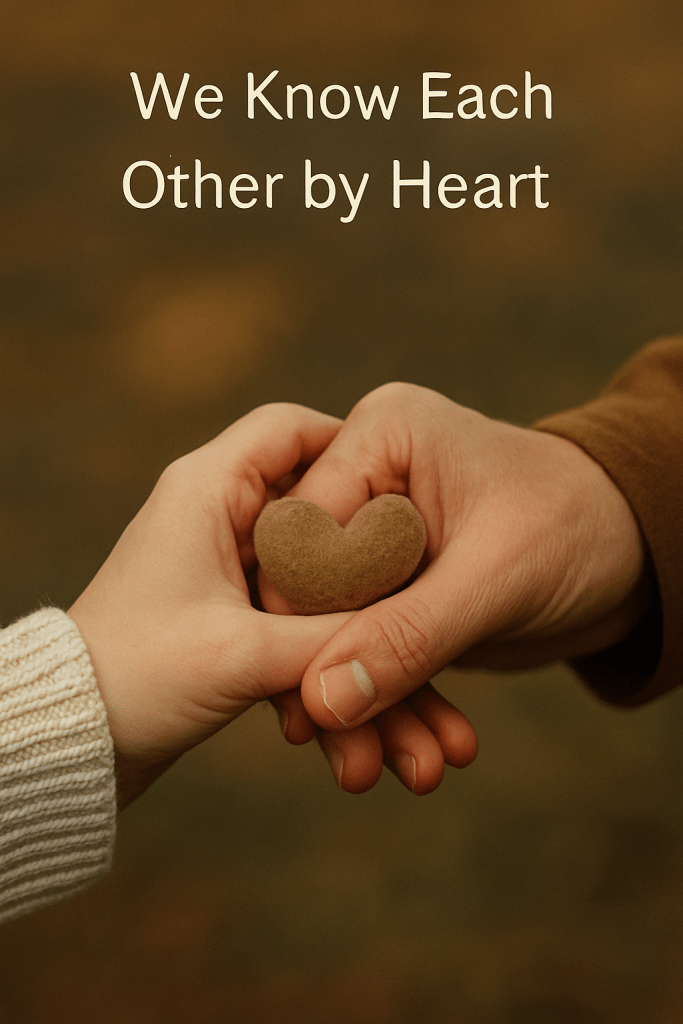
People often say that when dementia takes hold, it steals the person you once knew.
But they’re wrong.
It doesn’t erase a person. It simply rearranges the way they show up in the world. And if you look closely — with love, with patience — you can still see them. Sometimes in flashes. Sometimes in habits. And sometimes in the way they reach for your hand like it’s the only thing tethering them to the ground.
That’s how I still see him. Because I knew him — and I still do.
He’s always been the kind of man who speaks in actions more than words. A man who once said, “I’m off to build a castle for my wife,” and meant it — because that’s how he saw our home: something regal, something sacred, something worth building with his own two hands.
He is cheeky, irreverent, and full of dry humour that could turn a heated moment into a shared laugh. I still remember, before his diagnosis, when he was teaching me to drive. I was frustrated and snapped, “I’m not your staff to be told off!” Without missing a beat, he replied, “You’re right. If you were, I would’ve fired you yesterday.”
That was him. Witty. Quick. Never unkind.
Or how, after an argument, he’d disarm me completely by saying, “It’s so unfair of you to look that beautiful. Makes it impossible for me to stay mad.”
He never needed a stage to perform love — just a moment.
One Christmas, I was saving up to buy him a big TV. He found out and swung the car toward the shop, insisting, “Use our money. Just buy it now.”
That was him. Generous, always a step ahead, always cutting through sentiment with simple certainty: If something made me happy, it was worth having.
He proposed without preamble — took me to look at rings, told me to pick the best one, and just like that… we were engaged. No show. No fuss. Just knowing.
And when I once mentioned I was out test-driving a car, he rang me later that afternoon and said, “What colour do you want?” He had already called the dealership, already decided. Not because I needed a car — but because he wanted me to have something good.
That’s the man he’s always been.
He loved surprising me. But he could be surprised, too.
Like on his 65th birthday — I told him I had a work meeting in the hills and asked him to drive me. What he didn’t know was that I had already packed a bag with his clothes. He nearly caught me when he started searching for a pair of shoes I had already tucked away.
When we arrived, I handed him a note: You’ve been abducted for your birthday. He just smiled and said, “But I don’t have a change of clothes!” Then he looked at me and laughed: “I’ll never believe you again.” And in true fashion… he bought me a necklace — his ransom, he called it. Because he was the kind of man who couldn’t be surprised without turning it into a moment of giving.
We had traditions. Small ones. Sweet ones.
At the airport, we’d people-watch before overseas trips — inventing stories for strangers rushing past. A man chasing love and forgiveness. A woman off to begin again. A child seeing the world for the first time. He gave me that gift — of imagination, of slowing down, of wondering.
And when we finally went to Europe — my dream — he gave me that, too. A luxury river cruise. A whole month away. On the last day, he was asked to carry the flag because he was tall. But of course, He didn’t just carry it — he led the group like he was the tour guide, to the horror of the real one. I just smiled. Because that was him: bold, playful, quietly hilarious.
In Koblenz, we were so enchanted by the architecture that we accidentally followed the wrong tour group — until someone shouted, “Come back, you two!” We laughed like kids.
Because when we were together, we were never really lost.
And when he took me to meet his parents, I thought he misspoke — I was sure he had told me they had passed. But I didn’t say anything. We arrived at a cemetery. He walked me between their graves and said, “Here they are. I wanted them to meet you.” As if to say: You belong with me. In every part of my life — even the ones that came before.
After his diagnosis, things changed. Slowly, then all at once.
One day, while things were still mostly clear, he turned to me and said, “Please know I think you are beautiful. I want you to remember that… in case I forget to tell you later.” It wasn’t a compliment.
It was a lifeline. A thread tying me to the man he was — the man he still is.
And then there’s the moment I asked him, “Why do you think your mum would’ve loved me?” He looked at me, without thinking, and said, “Because you are so easy to love.” There was no poetry in it. No theatrics. Just truth. The kind that lives in the bones.
Even now — even in the forgetting — he still reaches for my hand.
Sometimes he asks, “Where are we?” even though we’re already home. So I take his hand and gently say, “We’re almost there. We’re safe.” And in that moment, I see it — the soft relief in his eyes, the quiet contentment that comes just from feeling me close.
When I whisper “I love you,” or bounce up to kiss him unexpectedly, he smiles — that same familiar smile.
Sometimes, he doesn’t recognise my face. Sometimes, he forgets my name. But then he’ll look at me and say, “You’re the best one… the one who’s always been good to me.”
And that’s when I know — even when memory slips away, his heart still remembers who I am.
Because even when words fade… love stays.
They say dementia takes things away. And it does.
But what it gives — oddly, painfully — is clarity. You start to see what truly matters.
The way someone’s hand fits yours. The weight of a smile. The way love — real love — doesn’t disappear. It simply learns to speak in softer ways.
And me
I’ve learned to let go of the version of him that lived in full colour
but I’ve never let go of the man.
Because I still see him. In glimpses. In gestures. In love.
We knew each other by heart. And somehow… through it all…
we still do.
Not just in memory, but in rhythm. In the way his hand still finds mine. In the way my voice still steadies him.
In the way we sit in silence now — no words needed — and still feel whole.
Because love — our love — hasn’t faded with the forgetting. It has only softened, deepened, endured.
It lives in the way we reach for each other, even when the past slips away.
And that is the truth we carry between us. Always.
Even now.
Especially now.
-
The Soft Story of Us
-
I Didn’t Need a Map, Only a Lantern Beside Me
People keep telling me it is time. Time to think about rest home care. Time to start looking after myself. Time to let go a little.
I know they mean well. They see the tiredness in my eyes, the long days that stretch into longer nights. But they do not see what I see. They do not wake in the quiet hours and feel his hand searching for mine even in sleep. They do not see the way his face softens when I help him with his tea, or the small smile when a familiar song plays. They do not know what it is like to still see the person beneath the illness.
They see duty. I see love that still breathes. They see a man fading. I see the man who once made me laugh until I cried, who still looks for me when he feels lost.
I know what I want. I know what I need to do. I do not need to be told what is best. I am already living what is best for my heart, even when it is hard.
Sometimes I just want someone to sit with me. To listen as I think things through. Not to tell me what to do or how to feel, but to simply be there. To let me speak my truth without trying to change it.
I do not need a map. I know this road. I have walked every turn of it, and every ache too.
All I need is a lantern beside me, a small steady light that reminds me I am not walking it alone. -
The Day We Both Laughed
Today I worked in the garden. It was hot, the kind of heat that makes the air hum and the soil smell alive. The beds needed mulching, new planting, and trimming. Work that doesn’t wait.
I haven’t been out in the garden as much as I want to since his surgery. Things have been too challenging, and leaving him by himself feels too risky. So even this small return to the soil felt like a homecoming, a piece of myself I had missed.
I asked him to stay inside, safe from the sun and the risk of falling. I explained it carefully and patiently, why it mattered, why I just needed a few moments to finish things. But explanations do not land the same way now. Words are harder for him to process, and the meaning slips away before it can settle. When I grow tired and he sees my frustration, he hears only rejection. He says quietly that he will go home, not understanding that he is already home. It is our familiar cycle, me trying to reason, him trying to belong, both of us a little heartbroken in between.
Still, I kept working. I finished what I could, took photos of the garden, the light, the new blooms, small proof of life still unfolding.
Then he came out to sit beside me on the deck, brushing his hand through the grass. He tried to lower himself to the ground, lost his balance, and rolled gently onto the deck like a small ball. For a moment I froze, then seeing he was not hurt, I laughed.It burst out of me, that laugh, pure and real, almost like before.
I apologised right away, but he smiled and said it was all right. He laughed too.
It felt like a rare gift, laughter meeting where words could not. Because more and more, the words do not come. He searches for them, and I see the effort in his face, the pauses growing longer, the gap between thought and speech widening like a quiet river.
But sometimes it does not need words. Sometimes it is enough to sit side by side, to share a laugh, to touch the same patch of grass and just be.
Today, for a brief moment, we were simply two people still finding each other in the spaces between words.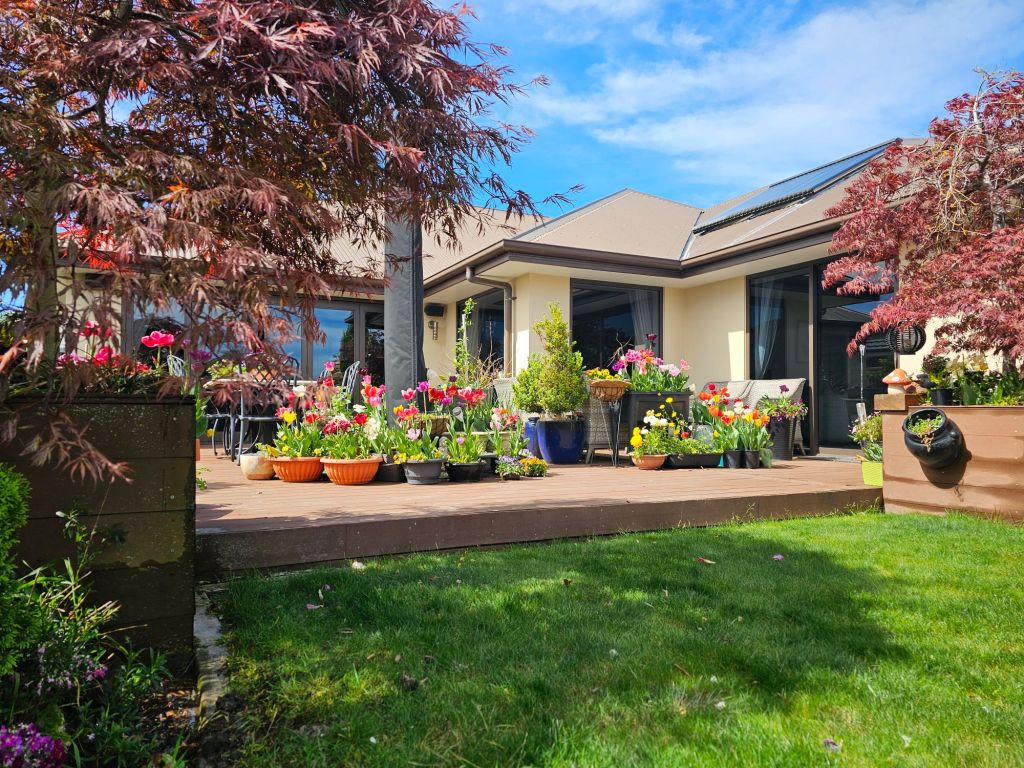
-
The Questions That Hurt
Today I sat in a sterile room, staring at the glow of a screen, waiting for answers. The scan didn’t show the same alarming growth as before. There were things there, yes, but not the kind that immediately demanded removal. Still, I asked for a biopsy. I needed certainty.
Afterwards, I found myself asking the registrar questions most people don’t want to say out loud. If the biopsy is positive and I choose not to go through another surgery, what then? What does life expectancy look like? Would it be painful if nothing more was done?
Those questions hung in the air, heavy and sharp. They weren’t easy to ask, but they mattered.
I realised in that moment something about myself: I don’t shy away from truth. Even when it’s raw, even when it hurts, I want it laid bare in front of me. Knowledge steadies me, gives me ground under my feet. Yet in that same space, I saw my shadow. The need for answers is also fear disguised. The fear of being wrong, fear of carrying regret, and fear of making the wrong call for someone who cannot choose for themselves.
There is a coldness in this role too. Talking about life and pain as if they were numbers on a page. Sometimes, I wonder if my pursuit of clarity strips away tenderness, makes me sound more like a decision-maker than a wife. But then I remember: both are true. I am the one who has to ask the hard questions, and I am the one who will lie awake at night replaying them.
This is love in its most complex form. It is both fierce and fragile at once. Love that doesn’t always mean fighting for more time, but choosing peace, dignity, and comfort. Love that walks into the hard questions because avoiding them would be easier, but far less kind.
In the end, I can’t control the story’s ending. All I can do is walk through it with honesty and love, even when love feels cruel.
-
Walking in the Rain
It rained today not a storm, just that soft, steady kind of rain that hushes everything. I walked around the lake. No umbrella, no destination. Just me, the path, and the gentle rhythm of raindrops on leaves and water.
There’s something deeply comforting about walking in the rain, especially near the lake. The world goes still. Ducks huddle under shrubs. The surface of the water ripples, reflecting a sky blurred with grey. The usual voices, cars, chatter—they all fade. And for once, I can hear my own breath. My own thoughts.
Lately, life has been loud not with sound, but with strain. The kind that piles up in invisible layers. Managing medications. Watching for signs. Explaining again and again what day it is, where we are, why I can’t leave his side. The falls. The confusion. The weight of being everything for someone who is slowly disappearing.
I didn’t walk to escape. I walked to feel something else, something quiet and mine. The rain didn’t bother me. It settled on my coat and face like the gentlest of companions. It didn’t ask anything of me. It just fell.
As I rounded the far side of the lake, a bird startled from the reeds and took flight. I stood still. Watched it go. And something in me exhaled.
Sometimes people ask how I manage. The truth is, I don’t always know. But today, I walked around the lake in the rain. And that was enough.
-
When the news feels personal
Late afternoon. I put on the six o’clock news. He is comfy and content. The presenter looks into the camera and he leans over and says, “I spoke to her last week.” A similar clip plays and he adds, “We saw this yesterday.”
I used to get annoyed and I would correct him. It never helped. Understanding what his brain is doing has changed that for me. Here is the simple why, in plain language.
- The brain’s reality tag gets fuzzy. Most of us file things as real life, TV, or a dream. With dementia that tagging system slips. A friendly face talking to camera can feel like a real conversation he actually had.
- Time gets jumbled. News and YouTube repeat stories. The familiarity is strong, so his mind reaches a reasonable conclusion that we saw it yesterday or last week.
- The mind fills the gaps. When memory is patchy, the brain auto completes the story so it makes sense. That is not lying. It is the brain doing its best guesswork.
- His eyesight adds to it. With macular degeneration the picture is not crisp, so the brain leans harder on assumptions and feelings. A Live banner or a warm voice can make it feel immediate and personal.
Put together, it is no surprise that he believes he has spoken to the people on TV. He is not being difficult. He is experiencing the world as his brain now presents it.
So I have changed my response. I keep it light and kind.
“It does feel like that, does it not? She is very friendly.”
Or a gentle anchor. “This is today’s six o’clock news. We are at home and they are in the studio.”That is all. No drama. Understanding has taken the heat out of the moment. I am less frustrated, he stays relaxed, and the evening goes better for both of us. Knowing the why helps me show up as the nicer, calmer version of myself. On an ordinary Tuesday at six, that feels like a win.
-
Still Us
The past few months have been heavy. Heavier than I’ve wanted to admit.
I’ve found myself snapping more often, the softness in my voice replaced with frustration. The days have blurred into a rhythm of exhaustion, of emotional grief layered with financial strain, each one feeding the other until I was running on fumes. Friends and family have started to say what I’ve been silently afraid to think: maybe I’ve reached my limit… maybe it’s time to consider the next step, the rest home, the letting go.
But in the stillness of the last couple of days, something shifted in me.
It wasn’t a loud epiphany or a dramatic moment. Just a quiet, honest conversation with my heart. And in that moment, I realised I had been standing too long in the shadow of my own pain. I had been so focused on what I was feeling, on what I was losing, that I stopped seeing what I still had.
Our life.
Our shared story.
The love that still exists between us, even if it’s changed shape.He may not always remember the details. But I do. And I want to make this time count.
Not out of guilt, or fear, or pressure but out of love. Out of a deep knowing that even now, we are still us.
That realisation doesn’t magically erase the hard days, or the broken sleep, or the ache of watching him slip further away. But it softens something in me. It reminds me that this season, as painful as it is, is also sacred. A time to show up with more gentleness. To laugh when we can. To hold his hand a little longer. To meet him where he is, rather than always wishing things were different.
I don’t know what tomorrow will bring. But I do know this: God has never stopped walking with us. Not once. And I believe He’s giving me the strength, not just to endure, but to choose joy where I can. To find moments of peace even in the chaos. To shift the weight from “why is this happening?” to “how can I love through this?”
And surprisingly, that shift brings light. A quiet kind of hope.
Because this isn’t the end of our story — it is a chapter. One I want to fill with as much meaning, laughter, and grace as we can carry. The kind of chapter that, years from now, I can look back on with no regrets, knowing I gave the best of me to the one who gave me so much.
We are still here. Still together.
Still us.
-
The Life I Thought I’d Have
Seven years ago, I began stepping back.
Not all at once but just enough to adjust. I started reducing hours, working from home, taking on smaller jobs that gave me space to be with him. To soak up the time while his memory was still intact. I told myself: Let’s make good memories now, while we can. For the harder days ahead.
I kept juggling multiple roles, short hours, different hats. I was still me, just a scaled-back version. Still contributing. Still in control.
But gradually, the letting-go began. One job at a time. Quiet resignations. Little decisions that felt necessary, not dramatic. And then his memory loss worsened. The confusion deepened. The anger surfaced, not at me, really, but at what was being lost.
At the same time, I started losing confidence in myself. I wasn’t performing at the level I once did. I missed things. I got reminders for tasks I forgot or did late. And I felt it: the sting of shame, the sense that I was failing—not just him, but everything. The multitasker in me, the professional, the woman who once thrived on structure and sharpness… she felt like she was slipping away too.
Eventually, I stepped back further. Not because I stopped caring—but because I couldn’t keep pretending I could do it all. The roles needed more than what I had left to give.
And with that came fear.
Fear of the future.
Fear of not having enough —financially, emotionally, mentally — when this chapter ends and I’m left to begin again. Fear of facing that future alone.This isn’t the life I imagined.
But it’s the life I’ve quietly stitched together, threaded with duty, love, exhaustion, and grief. I gave up those jobs one by one, not because I was weak but because I was holding someone else’s life together.
And somewhere in the middle of all that letting go… I forgot to hold onto myself.
-
What You Don’t See: A Caregiver’s Journal
When Love Feels Like War
Some days, I look at the man beside me and wonder where he’s gone.Not physically—he’s right there. But everything that once made him him—the humour, the gentleness, the spark in his eyes—has slowly been swept away.He gets angry now. Sometimes even aggressive. Words fly out that cut deep—sharper than anything he ever said when he was well. And I, the woman who vowed to love him in sickness and in health, sometimes feel like I’m caring for a stranger wearing my husband’s skin.
I don’t always get it right.I lose my patience. I cry with the tap running so no one hears. There are days I question if keeping those vows is still the right thing—because love isn’t supposed to feel like this. Like walking on eggshells. Like holding space for someone who forgets how to love me back.And yet—I stay.Because love, I’ve learned, isn’t always gentle. Sometimes it’s fierce. Messy. Gritted-teeth and tear-streaked relentless. And the strength it takes to keep showing up? That’s not the kind anyone claps for.But it’s the kind that keeps him safe. That keeps him here.

The Strength No One Sees
People tell me I’m strong.They see my smile and assume I’m coping.But they don’t see the cracks—the quiet ones. The kind that don’t make noise but leave me hollow by the end of the day.They don’t see me guiding him to the toilet because he can’t remember how. They don’t hear the arguments over nothing. They don’t feel the weight of coaxing him into the shower, or notice the small bruises I hide when confusion makes him lash out.And still, I doubt myself. I wonder if I’m doing right by him when all I feel is tired. When love feels more like endurance than joy.But I get up every morning.Not because I’m unbreakable—but because I broke, and I still chose to stay.That kind of strength? It’s quiet. It’s unseen. But maybe that’s what makes it real.
And maybe that’s what keeps both of us going.
The Night That Won’t Let Go
It’s been weeks since that night he went missing but the fear hasn’t left me.
I still feel it in my chest, like a knot that won’t loosen. I still hear the sound of the door opening. The silence that followed. The moment I realised he was gone.
I did everything I could—installed sensor mats, a Ring camera, a GPS watch that’s supposed to track him. I thought I had created a fortress of safety. But dementia doesn’t respect boundaries. It slips through cracks and disappears into the night, taking your peace with it.
That night was terror. The kind that leaves you cold long after the danger has passed. And it haunts me still. Even now, when I don’t see him in the room, even for a second, my heart races. I check every corner. I look out the window. I replay every step. I don’t relax anymore. I just manage.
And then comes the anger.
I know it isn’t fair. I know he doesn’t understand what he’s putting me through. But sometimes I look at him, and the frustration rises. He doesn’t see the life I’ve had to press pause on. He doesn’t see how tired I am, how alone I feel in this—even when people are kind. He doesn’t see that every day I juggle decisions, finances, medical forms, routines, all while pretending I’ve got this under control.
He doesn’t know that the future I once imagined—growing old together, travelling, doing the small things like reading beside each other—is gone. That I grieve not just him, but us. The version of us that’s slowly being erased.
And what hurts most is that I can’t even be angry at him. He didn’t choose this. Neither did I. But I live in it. Every day.
There are moments I hold it all in so tightly—because what would happen if I didn’t? And then there are moments like this, when the tears fall as I write, and I let myself say the truth:
I’m exhausted.
I’m afraid.
I’m heartbroken.
And yes—sometimes, I’m angry. -
Asking, When I’d Rather Give
Sometimes the most difficult thing isn’t the caregiving — it’s asking for help. This post is for anyone learning to ask, not because they want to, but because they have to.
———————————————————————————————–
I’ve always preferred to give.
It’s in my DNA , in the way I was raised, in how I live, and how I love. I like to show up with something in hand: a cake, a meal, a warm gesture, a practical solution. I like being the one who helps, not the one who needs help.
But life, as it so often does, has asked me to grow in ways I never expected.
These days, I spend my late nights doing the quiet work when he is finally asleep and I can catch my breath. That’s when I research, think clearly, and write. I study government websites, read between the lines of policy documents, and craft careful emails — because someone I love depends on me. And even though I don’t like asking, I do it. Because I must.
That doesn’t mean it’s easy. It can feel humbling. It can feel exposing. But it has also been an invitation to courage.
You see, navigating the system isn’t just about ticking boxes. It’s about learning a whole new language , the right words, the right framing, the right timing. It’s listening carefully not only to what’s said, but to what’s not. It’s knowing that help exists, but often hides behind unclear forms and closed doors.
So I’ve made it my quiet mission to learn how to open those doors. Not just for us, but perhaps, one day, for others too.
And even in the hardest moments, I’ve been met with goodness. With neighbours who just show up. With friends who don’t ask what I need, but simply do. With practical kindness that arrives without fanfare. With the community that rose for me when I needed it most.
That’s the part I hold on to when things feel heavy. The deep reminder that I’m not alone in this. That grace is often tucked into the smallest acts — a message, a meal, a shared silence.
I’m learning, too, that asking isn’t weakness. It’s strength wrapped in vulnerability. It’s the quiet bravery of someone who refuses to give up.
So yes — I’ll keep writing those emails. I’ll keep staying up late and chasing clarity in a system not designed for ease.Because there’s a kind of hope that lives in persistence. And because love makes you braver than you ever thought you could be.
-
Graces in the In-Between
When my husband went missing, I was terrified. I searched the streets he’d wandered before, willing myself not to cry. He was only gone for an hour but it felt like forever. I didn’t keep him safe that day… but the community did.
And then, something remarkable happened.
In the hours and days that followed, grace arrived quietly, again and again.
Friends and strangers rallied. Messages came through — kind, thoughtful, immediate.
Soup was delivered by a neighbour we didn’t even know. Flowers arrived, unannounced. A friend from afar left a bag of fruits on the front step, tucked gently beside the “Welcome” mat. Brunch was brought over by friends — shared over stories, with extras that lasted us for days.
And then there were the offers. People I didn’t even know reached out — offering to sit with him so I could take a breather. Some just said, “If you ever want to chat, I’m here.” A few left their mobile numbers, saying, “If you ever need help, please call.”
And then my neighbour — always steady — quietly built a ramp at our front door. No fanfare. Just love, measured in timber and care.
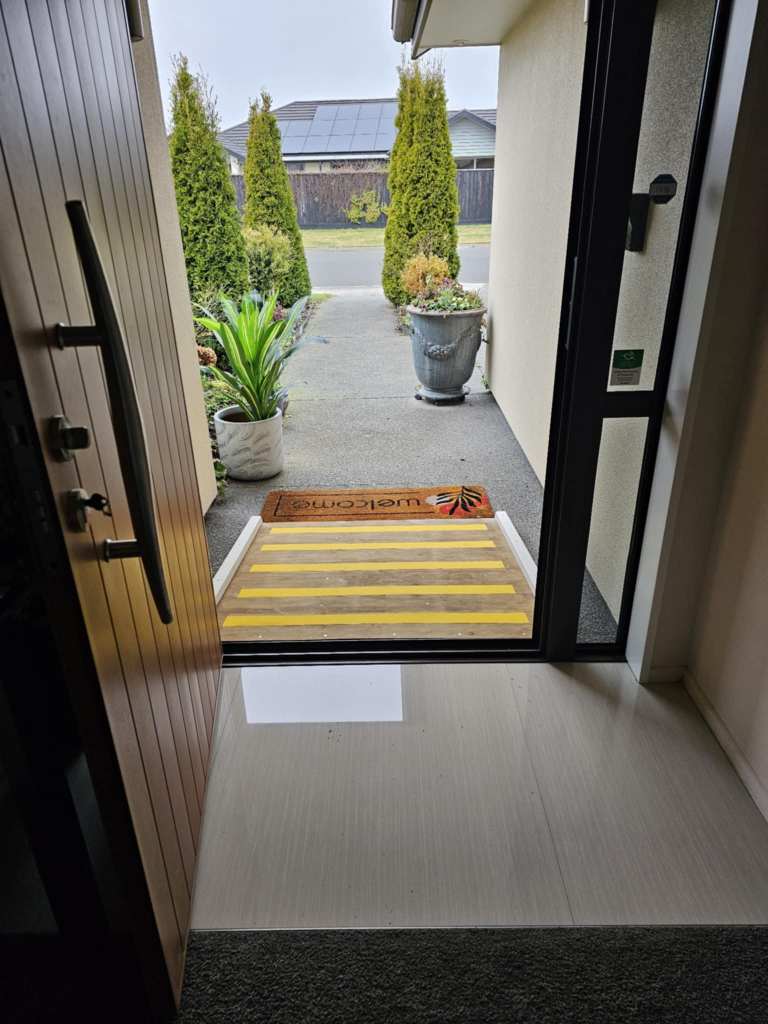
A ramp built quietly by Paul, our neighbour — a small slope, a lighter step, a path made easier.
Now when I open the door, I see it: a path made easier, a way made safer, a gesture that carries more than its weight
That ramp has become a symbol to me — not just of practicality, but of what happens when people decide to show up. To see you.
To hold what you’re holding, even if only for a moment.
To make the ground a little less steep.His condition will only progress. There is no reversing the journey we’re on. But in the in-between — the spaces between heartbreak and resolve — these moments of kindness come.
They are the graces that find me.
Not dramatic. Not loud. But thoughtful. Precise. Timely.
The kind of grace that says , “You are not alone.”To everyone who reached out, dropped off, built, called, texted, or simply stood beside us — thank you. You were grace in the shape of people.
And may little graces find you, too, in all the in-between moments that life quietly asks us to endure.
-
He Is Still That Man
Even now
with memory fading like mist in the morning sun,
with words tangled,
and moments slipping away as soon as they come
he is still that man.The man who reaches for his wallet when we’re at the checkout, because he’s always been the one to provide.
Even now, he tries not because he remembers the routine,but because deep inside, he still wants to care for me.The man who used to bring me coffee in bed in the morning —
even if it meant spills down the hallway, even if I gently had to take that job back
because it was always his way of starting our day with warmth.The man who notices the rubbish bins out on the curb and says, “Sorry I didn’t bring those in.” Even if they haven’t been emptied yet.
Because he still wants to protect, still wants to do his part.The man who asks if I’m sitting next to him.
Who needs to see me, feel me near. Because even if he forgets my name, he knows where he feels safe.Sometimes he asks, “What can I do for you?” And my heart tightens, because he doesn’t really know how anymore. But he still wants to.
That’s the kind of man he is.
Not perfect. Not sharp and strong like before.
But still reaching. Still loving.
Still him.Dementia has taken so much: his words, his memory, his understanding of time.
But it hasn’t taken this:
his desire to love, to serve, to show up for me in the ways he remembers.And so I remind myself , especially on the hard days,
that I’m not just caring for a man with dementia.I’m loving a man who still, deep down, is the same one who’s always loved me.
Not in grand ways now. But in small, persistent, deeply human ways.
A hand held.
A seat beside me.
A bin brought in too early.
A wallet offered at the till.
A heart that still wants to be mine.Through the fog, he is still that man. And I will love him through every moment of remembering and forgetting.
-
I Didn’t Keep Him Safe But the Compassion of Community Saved Him
I tell myself I’ve done everything I can.
That I’ve planned for this. That I’ve made it as safe as possible.
But dementia doesn’t follow plans.He was gone.
Only an hour at most—but in that hour, I aged. My thoughts spiraled. My heart raced. The fear was physical. It was raining. It was dark. I checked the Ring camera. He had walked out silently. Just like that.
I grabbed my keys and got in the car. I drove through the streets he’d wandered in before—routes etched into memory from past incidents. I called his name out the window, over the sound of rain and my own panic. My tears threatened to spill, but I forced them back. I needed clear vision. I had to see through the dark.
What consumed my mind was the recent news—a woman with dementia who had gone missing. Two weeks later, she was found deceased. That fear haunted every turn of my steering wheel.
Please, not him. Not like that. Not our story.
When I returned home, I knocked on my neighbour’s door. He’s always been my go-to in a crisis. Without hesitation, he came to help.
I then posted—shaky and panicked—on two community pages online. No photo. Just a frantic message: “I’m looking for my husband. If he turns up at your door, please message me. I’m out looking.” In my panic, I forgot to include important details. But the community didn’t hesitate.
The response was instant. Strangers asked for more information. Some began searching. People took to the streets on bikes, in cars, walking under umbrellas and hooded coats. The police arrived quickly and calmly. They reassured me and launched their own search. Suddenly, it wasn’t just me. Everyone had rallied around me.
Eventually, he was found by a kind family. He had fallen, his glasses were broken, and he was bleeding. But he was still cracking jokes—oblivious to the panic he’d left behind. He thought he was just “going home.
The ambulance came. He was safe.
And I? I finally allowed myself to fall apart.
Despite all my preparation—Ring cameras, GPS watch (whose battery had run flat that very day), detailed routines—he still got out. And guilt crept in:
I should’ve checked the battery.
I should’ve seen the door.
I didn’t keep him safe.But the truth is—I couldn’t have done it alone.
The people around me—my neighbour, the community, strangers, the police—stepped into that terrifying hour and made sure it didn’t become a tragedy. They carried what I couldn’t carry alone. They didn’t just help me find him. They helped me find strength again.
He was gone for an hour.
But it felt like forever.
It was terrifying.
I didn’t keep him safe.
But the community saved him.This isn’t just a story about someone going missing.
It’s about being found—in every sense.
It’s about how kindness still lives in people, and how compassion can show up with headlights in the rain.They say it takes a village.
That night, I saw the village rise. -
Trapped Inside His Mind
I don’t know what dementia feels like from the inside. I can only speak from where I stand—next to him, watching, listening, guessing at what it must be like for him.
There are times he tries to speak and I can tell—he knows what he wants to say. I can see it in his eyes, that familiar spark of clarity. But then, the words come out wrong. Or not at all. And he knows it. You can see the flicker of frustration, like he’s just missed a step he’s taken his whole life.
It’s not just forgetting. It’s like the mind is trying to work, but something misfires—like a wire has come loose and the message just can’t get through.
And I think: how must that feel?
To still know… but not be able to say.
To try… but not have the right pieces fall into place.
To see the world carry on around you while you stand in the fog, waving, hoping someone still sees you.It’s heartbreaking. Not just for him—but for me, too. Because I remember how sharp, how witty, how precise he used to be. And now, he’s still all those things in spirit… but the bridge between us is harder to cross.
I don’t claim to understand it fully. I just know what I see. And I know the ache of standing next to someone you love as they fade in and out of clarity. Sometimes I get glimpses of the him I’ve always known. Other times, it feels like he’s slipping through my fingers.
Dementia doesn’t steal everything all at once. It unravels. Slowly. Cruelly. And somewhere in that unraveling, I try to hold the thread.
So I listen differently now. I pay attention to tone, to gestures, to the way he looks at me when the words fail him. Because even when the words are wrong, the meaning is often still there. I just have to reach for it.
And in those moments, I remind myself—and him—that he’s still here. Still him. Still loved.
We may have to meet in the fog sometimes. But love… love always finds its way through.
-
The World Needs More Like Him
Some people don’t need an audience to do the right thing. They’re not loud about it. They don’t look for praise. They just live their lives with quiet decency — steady, kind, and thoughtful. He’s one of them.
After a major earthquake, during one of the many aftershocks, we were talking on the phone. He was away on a business trip, four hours from home. I told him I was fine — and I was — just tired, like everyone else, trying to stay steady.
But at 1 a.m., there was a knock on the door.
He had left early and driven through the night, through disrupted roads and aftershocks, just to be near me. Not because I asked. Not because I was in distress. But because he didn’t want me facing it alone.
Another time, a jolt in the night woke us. The light fitting above our bed was swaying. Without a word, he shifted closer and placed himself between me and the ceiling — just in case. It wasn’t grand. Just instinct. Just care.
Years ago, when I was working overseas with a non-profit in a rural village, an elderly local woman was hit by a motorbike. She needed surgery, and we had almost nothing to work with — not enough blood, not enough funds. Late that night, after I returned exhausted and heavy-hearted, he called. He somehow sensed something was wrong. I told him everything. His response was simple: “Use the money we set aside. That’s what it’s there for.”
He once hired a young immigrant — bright, capable, educated — but overlooked for years and working in the kitchen of a café. He saw her potential immediately. Hired her. Believed in her. That opened doors. When people later asked how he knew, he just shrugged and said, “Because more people need someone to believe in them.”
Even now, long after he’s stepped away from work, people still come to him. They seek his advice, his opinion, or just a listening ear. They don’t come out of habit. They come because they trust him.
And then there are the quiet, tender moments — when he sees me lost in thought and asks, “Do you miss your parents? Maybe we could fly you over to see them… or bring them here?” I remind him they’re gone. He lowers his eyes, a little embarrassed. But in that forgetfulness is a love that’s still trying to ease my sorrow.
He isn’t perfect. But he is good. Solid. Kind in ways that are easy to miss if you’re not paying attention — but unforgettable if you are.
The world often overlooks men like him.
It shouldn’t.
Because the world needs more like him.
-
He Gave Me His Glasses

Tonight, he was restless again — caught in that familiar early evening haze, the one where nothing feels quite right and he just wants to “go home.” It’s a phrase I’ve come to know well. It doesn’t mean a location. It means safety. Belonging. A need for something to make sense.
So we went for a drive. I didn’t have a plan, just the sense that moving forward might calm the unsettled feeling swirling inside him. We ended up at the McDonald’s drive-through, something simple and familiar. I ordered hot apple pies.
As we pulled up to pay, he leaned forward, fidgeting. He started searching his pockets — his brow furrowed, his fingers moving faster, urgent. “I’ve got this,” he seemed to say without words. He’s always been that kind of man. The one who pays. The provider. The protector.
I told him gently, “It’s okay, I’ve got the bank card.” But I could see that didn’t quite land. The concept didn’t connect. His face didn’t settle. He kept patting his pockets. Finally, he took off his glasses — the only thing in there — and handed them to me.
He thought it was money. Or maybe he knew it wasn’t, but in that moment, it was all he had to give. And he gave it. That gesture said everything. It said, “I still want to take care of you.” It said, “Let me offer something.”
We drove home quietly after that, eating our pies. He was tired, and for the first time in hours, content. He got into bed not long after. That small outing — that tiny moment — somehow gave him the sense that he had done his part. That he had provided.
And maybe he did. Because tonight, he gave me more than his glasses. He gave me a glimpse of the man he still is, buried under the confusion and fading memory — the man who still wants to show up for me, in the only way he can.
I’ll hold on to that. -
When It Doesn’t All Make Sense
There are days when I can write with clarity, when my reflections feel whole. But this isn’t one of those. This is me—still in the middle. Still uncertain. Still asking if I’m enough.
Like so many of my days since caregiving began, this piece isn’t wrapped in resolution. It’s just the next step in the fog.

I wish I could say I’ve made peace with all the parts of me. But the truth is—I haven’t.
Some days I feel strong. Other days I question everything.
Some moments I’m filled with faith. Others, I feel like I’m slipping. I believe in grace, but I also wonder if I’ve used it up. I try to do what’s right, but I still carry the weight of what I’ve done wrong.
There are no clean lines in my life. No neat resolution. Only contradictions I don’t always know how to live with. Only the ache of wanting to be better and the knowledge that I haven’t always been.
And yet… I keep going. Not because I have it all figured out. But because something in me refuses to give up.
Because even in the mess, I still long for goodness. Because I still pray, even when I’m not sure how to begin.I don’t have a perfect faith. I have a cracked one – a faith that limps, but keeps showing up. And maybe that’s what God sees. Not the polished story I wish I had. But the real one—the torn pages, the questions, the conflict.
And maybe… just maybe… that’s enough for Him.
-
Moments That Slip Through the Fog

Sometimes, even now, he surprises me.
Like the time I asked him what he wanted for breakfast, and he looked me straight in the eye and said, “A glass of champagne and you in a red dress.” I laughed so hard, I nearly burned the toast. He didn’t remember saying it a few minutes later, but the sparkle in his eye lingered — like a curtain momentarily lifted to let the light through.
Or the afternoon we sat on the couch, and out of nowhere he whispered, “You’re still the prettiest girl I know.” I turned to him, half-expecting confusion or misdirection, but no — that was all him. The man I married. The one who always knew how to make me blush.
Then there was the sock episode — he wore mine, bright pink and far too small, and insisted they were “limited edition men’s ankle warmers.” He defended them fiercely, right until he tripped trying to stretch one over his heel and we both ended up in fits of laughter.
These are the moments that keep me going. Because even now, even when memories fade or days blur into each other, there are flickers. Tiny rebellions of joy. Love surfacing in unexpected ways — a cheeky grin, a ridiculous joke, or a sudden urge to walk hand-in-hand around the garden, like we used to when everything still made sense.
They don’t stay long. But they’re enough.
They remind me that he’s still here — and so am I. Not just surviving, but laughing. Still living. -
More Than Memory: What Dementia Steals and What We Learn to Adapt
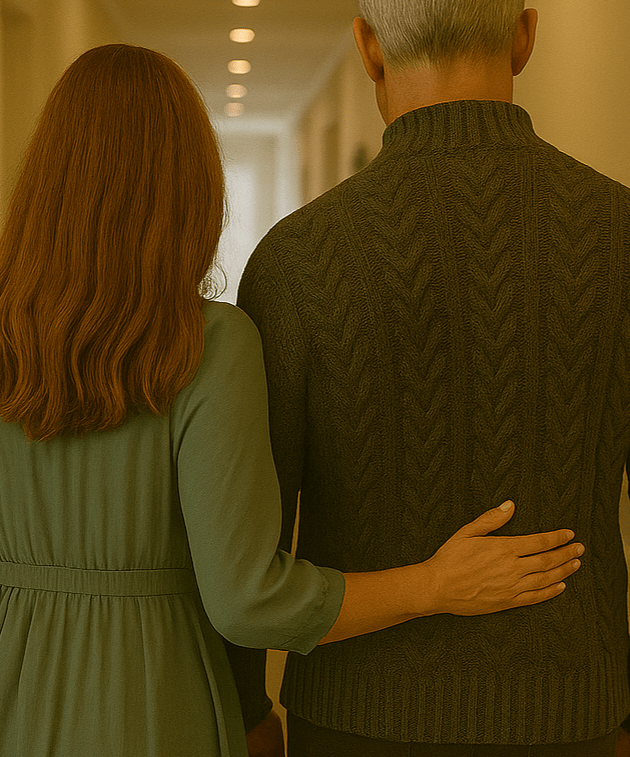
The hardest part of this condition isn’t always the forgetting. It’s the slow, quiet erosion of certainty — the confusion that seeps into daily life, the disorientation that unsettles even the familiar. And for someone like him — a man once so quick, capable, and rooted in routine — it feels like such a cruel undoing.
I see it in the smallest moments: standing before a cupboard, unsure of what he came for. Putting a shirt on over his pyjamas. Looking at the kettle and forgetting how to use it. These aren’t mere slips — they’re signs that something deeper is shifting. And each time, it stings. Because I remember him as he was. I still see who he is.What’s painful isn’t just what’s gone, but knowing how much he would struggle with being seen this way. He always took pride in doing things well. And now, even the simplest tasks often need my quiet help.
We tried to prepare — enrolling in courses, asking questions, trying to understand what was coming. We wanted to face it with readiness, with grace. But no amount of knowledge can soften what this journey truly demands. It changes your days, your roles, your home, and even how you speak and move. Nothing prepares you for how much you’ll need to let go — and how much you’ll fight to hold on.
We tried to prepare in every way we could — mentally, emotionally, physically. We took courses, asked questions, and read everything we could, hoping knowledge might soften the unknown. Even our home was built with this journey in mind. We factored in what might one day be needed — wider hallways, easy bathroom access, a smart toilet, smooth flooring for safe movement, even room to navigate a wheelchair if it came to that.
These weren’t last-minute adjustments but thoughtful choices from the beginning — a kind of quiet caregiving built into the walls. We wanted our home to be a place where he could stay, safely and with dignity, no matter what changed.
So I adapt. I reshape our space, our days, and my own expectations . Adjustment isn’t something you do once. It’s something you do over and over. Every time something shifts in him, I shift too — in rhythm, in tone, in patience. I change not just how I care, but how I live.
That’s become my quiet promise: to preserve his comfort and his dignity. To guide without taking away his pride. To step in without stepping over. I change things behind the scenes so he doesn’t feel how much I’ve had to rearrange. Because he’s already carrying enough. He shouldn’t have to carry the weight of what’s changing, too.
But I’ll be honest — I haven’t always done it gently. There are moments when I’ve snapped, raised my voice, or met his agitation with my own. I wish I hadn’t. But I’m human. I care so deeply it sometimes hurts. And when I fail, the guilt follows.
To make all of this work, I’ve had to reframe my life. I stepped back from my full-time work. I now work from home, not because it’s easier, but because it’s the only way I can make sure he stays where he feels safest. Home. With me. That kind of care can’t be scheduled — it needs presence, patience, and love that doesn’t end when the clock does.
We’ve had help along the way, and I’m grateful. But even that takes work — learning the right words to say, understanding how to describe what’s needed. “Standby assist.” “Mandatory prompts.”
Still, through it all, there are moments — a smile, a laugh, a sudden tenderness — when I see him again. The man I married is still here, even if the world has become unfamiliar to him. His essence hasn’t vanished. It’s just harder to reach.
And so I keep adjusting. Keep softening the edges. Keep showing up — however imperfectly — in the only way I know how. With quiet love. With unwavering presence. With hope that somehow, through all these changes, what matters most still finds a way to remain.
-
To the One I Still Love, Even When It Hurts
There are days I don’t recognise you. Not in your words, not in your eyes, not in the way you look at me like I’m the stranger.
And I try—I really try—to remind myself that it’s not you, it’s the illness. But when the harshness cuts through, when your voice rises and your eyes narrow, It feels like I’m standing across from someone who no longer knows how to love me.
And it breaks me.

Because I remember the man who used to make me laugh,who used to protect me, who looked at me like I was the best thing he’d ever found.
I still see him sometimes—in the quiet moments, in the flicker of a smile,in the way your hand still searches for mine in sleep. But those moments feel fewer now.And I miss you. I miss you so much it feels like a grief that doesn’t end.
Sometimes, I resent this journey.I resent that I’m the one carrying the weight, that I have to stay calm when I feel like screaming, that I have to be strong when all I want is someone to say, “Let me take care of you for once.”
But still, I stay. Not out of duty. Not just because of vows spoken years ago. I stay because love—real love—isn’t about ease or comfort.It’s about presence.
And I promised you I would be here, even if you forgot who I was.
So I will hold your hand when it trembles. I will soothe your anger, even when I’m hurting too. I will walk beside you, even when it feels like you’ve turned against me. Because deep down, I know you’re still in there, lost in the fog.
But I also need to remember me.That I matter too. That my pain is real. That I’m allowed to cry, to ache, to question.And that none of this makes me weak — it just means I’m tired.
So tonight, I’m writing this for me.To release the guilt. To honour the struggle. To remind myself that I’m still here.
And I’m doing my best. Even on the days it feels like love is a battlefield. Even when it feels like I’ve lost you, one piece at a time.
I’m still here.And somehow, I still love you.
More posts
Twenty Twenty-Five
email@example.com
+1 555 349 1806
