Three weeks after the surgery, we now know more. The growth was superficial — for that, I give thanks. But it was high-grade, and that word brings its own weight.
The doctors gave us options: another surgery soon to clear anything left behind, or wait three months and see if it returns.
I’ve chosen to wait.
It was not an easy decision. On one hand, the tumour demands swift action. On the other, the dementia quietly worsens with each disruption. The first surgery already pushed his memory further from reach and the days after were harder than I let on. Another procedure so soon could unravel even more. And I can’t put him through that. Not when the risk is still only a “maybe.”
I found myself weighing one urgency against another — and wondering, what would we rather hold on to? The answer wasn’t simple. Both paths carry risk. Both feel unfinished. But we’ve done what we could. The growth is out. We took the right steps, asked the questions, listened closely. And now, I place what remains in God’s hands.
There comes a moment when we must step back — not in surrender, but in reverence — and allow an opportunity for God’s grace to enter and do the rest.
I believe He already knows the road ahead. I’ve always asked for the wisdom to choose well, and now I ask for grace — grace to live with this choice, and peace to accept whatever it brings.
I’m not asking for miracles. Just strength. Just enough light for the next step. I want to preserve what we still have — the moments still within our reach — rather than chase after certainty and lose more of him in the process.
I trust that God will give us what we need, when we need it.
There are days when simply making it to nightfall feels like a quiet triumph. Days when I find myself at the edge of exhaustion—worn down by the constant demands of caring for my husband whose world is slowly unravelling. As his dementia deepens, so too do the challenges. And yet, in the quietest, most difficult moments, the vows I once spoke— for better or worse, in sickness and in health — don’t fade into memory. They rise within me, steady and clear, asking to be lived out once more.
I don’t always have the strength. Truthfully, there are moments I want to stop, to step away from the weight of it all. But I never truly can, because something greater keeps lifting me.
That something is God. It is not my own willpower that keeps me going—it is grace. God meets me at the edge of my endurance and gently carries me further. When I’m overwhelmed and feel as though I can’t take another step, He becomes my strength. When I am lost in the fog of weariness and worry, He reminds me that I am not walking alone.
I’ve always known, deep down, that I’m not here just for myself. That life was never meant to be lived only inward. Love — especially the kind that stays through hardship — asks me to give, to bend, to hold on. It’s not about grand gestures. It’s in the quiet, daily choosing to show up. And sometimes, when I’m sitting with the weight of it all, I think of that verse—”Greater love has no one than this: to lay down one’s life for a friend.” Not as something I strive for, but as something I’ve come to live in my own quiet way.
These vows I honour are no longer just about marriage—they have become a sacred calling. Each day I choose to love, not out of obligation, but because of the grace I receive. I cry, I stumble, I grow tired. But then something quiet rises within me again: a stillness, a strength, a whisper from God that says, “You are not alone.”
And so I carry on. Not because I always feel strong. But because I believe—deeply, humbly—that God walks with me. He holds me up when I can no longer stand. God is beside me, every step of the way.
There are moments when he looks around and says, “I don’t know where I am.” And in that instant, I imagine how frightening it must be inside his mind—searching for something familiar, anything to hold onto.
So he reaches out—not just with his hands, but with his memories. Do I need to go to work? What day is it? I think I need to go home to my parents. He speaks of people long gone, of places that no longer exist, trying to anchor himself to something—anything—that will make sense.
And yet, the world he wakes into each day doesn’t match the one he remembers.
That’s the heartbreak of dementia. The world slips away piece by piece while the body remains. I see it happening right in front of me, and still I can’t imagine what it feels like from where he stands—caught between time, place, and memory.
Sometimes, he looks at me and doesn’t know I’m his wife. But he knows I’m someone who cares.
And that’s enough.
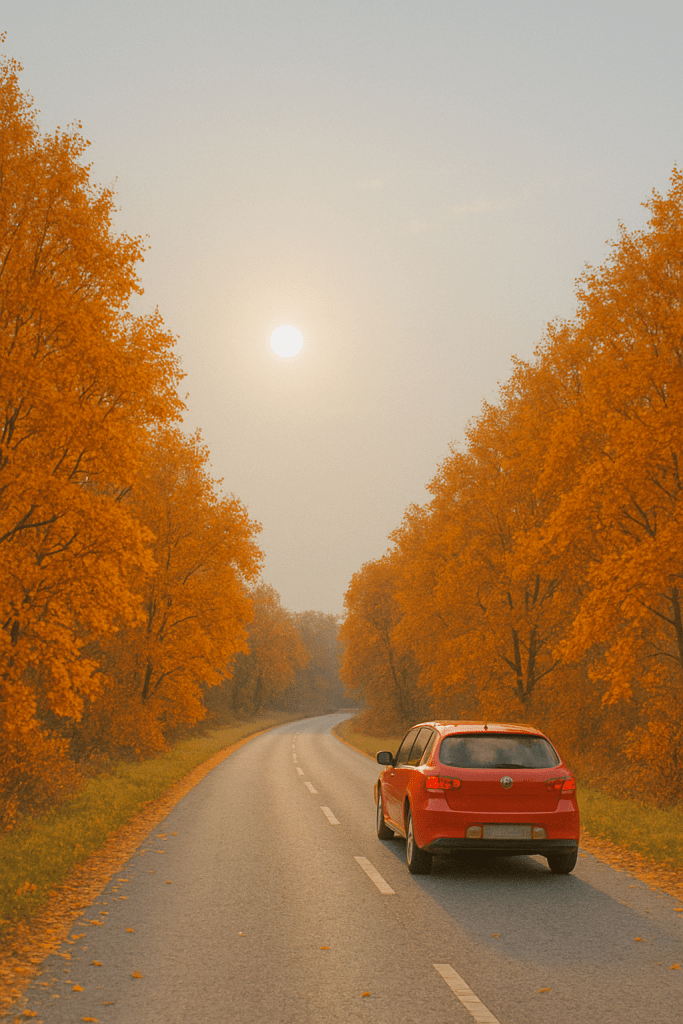
Because I have to be his anchor when the fog rolls in. His guide through the mist.
I can’t pull him out of the confusion. I can’t give him back the certainty that once lived so easily in him. But I can be kind. I can be steady. I can stay.
It takes courage—more than I thought I had. But love asks that of us. Not the kind you see in movies or read in stories. The real kind. The patient kind. The kind that shows up even when the person you love forgets who you are.
Because every now and then, through that dense fog, there’s a flicker—a moment of clarity where he smiles, where recognition dawns, however briefly.
And for those few precious seconds, it feels like the sun breaking through the clouds.
So I keep going. I walk beside him through the confusion, holding his hand through the uncertainty. I remind him—gently, often silently—that he is not alone.
Even if he forgets everything else,he will never forget how it feels to be loved.
Tonight was one of those nights—those increasingly frequent nights—when he said he wanted to go home.
No matter how many times I told him he was already home, it didn’t stick. I tried to sound calm, gentle, reassuring — but nothing I said reached him. He just kept repeating it. Like my words vanished before they ever reached him.
Eventually, I tucked him into bed, exhausted from the cycle. I knew he’d get up again. So I turned off the lights and I went back to the lounge. I couldn’t take hearing it again. Sure enough, he came out twice, looking for me. I watched him from the home cameras I had installed to keep an eye on him.
Each time he wandered out, I stayed hidden—quiet, angry at myself for needing to hide. For not having enough patience. I sat there in the dark, steeped in guilt. Frustrated with myself more than with him. He didn’t ask for this. He doesn’t understand what’s happening. And here I was—too worn down to meet him with compassion in that moment.
And then I remembered something he once told me:When he was a young boy, his mum was very ill and had to be in the hospital. He was left with his grandparents and spent many nights alone in a back room, listening to the rain on the roof, longing for his mother.
And I thought—maybe that’s how he feels now. Alone. Confused. Longing for a sense of safety he can’t quite name.
I couldn’t let him go to sleep like that. I couldn’t let him carry that confusion by himself. So I crept back into bed and held him. At first, he didn’t know I was his wife. But he knew I was someone who cared.That was enough to settle him. His breathing softened, His body relaxed.
Then I turned on the light—and he recognised me. The relief on his face undid me.
Moments like these wash away a whole day’s worth of frustration.
Because no matter how tired I am, no matter how many times I lose my temper—I will not let him feel alone in the dark.
As long as I’m here,even if he forgets who I am,he will never forget how it feels to be loved.
On the way home today, he said he wanted to buy something—but couldn’t remember what. He tried to describe it, but the words wouldn’t come. After a moment, he sighed and said quietly, “I feel silly.”
I gently told him he wasn’t silly. “It’s just your memory playing tricks,” I said. “That’s all.” But he insisted with a cheeky grin, “No, I’m definitely silly.”
So I smiled and teased back, “Alright, maybe just a little—but that’s just the dementia.”
Without missing a beat, he shot back, “Well, I’m not sharing my dementia with you!”
I laughed and said, “Good—because someone has to stay sensible.”
And just like that, the weight of the moment shifted. His frustration gave way to humour, and we met in that place we both know so well—where laughter becomes a balm.
Moments like this don’t erase the hard parts, but they soften them. And sometimes, the best way to face what’s happening is not by fighting it, but by finding each other through it
This is one of those moments. He wants to go home again. I’ve explained. I’ve reassured. I’ve tried to redirect. And still, he walks. Or repeats. Or looks at me like I’m not enough to make it better.
I feel myself tightening — in my jaw, in my chest, in that part of me that wants to scream.
But I breathe.
This is not about reason. This is not about control. This is dementia, pulling him away from the world we once shared — and dragging me with it, without a map.
It is exhausting to keep entering his world. It is draining to keep surrendering my own. But I do it — not because I’m strong, but because I love him.
And when I lose my patience — because I will — I will not shame myself for it. I am allowed to be tired. I am allowed to be human.
Even on the days I snap, Even when I hide in the dark or walk away, I come back. I always come back. And that is love.
So I take a breath. I soften my eyes.
And I remind myself:I don’t have to fix this. I just have to stay present. And remember that I am still here. Still me. Even in the storm.
I was watching a movie the other night. Nothing grand—just a quiet scene in a café. A warm glow, that soft murmur of people at ease. It was the kind of place we used to visit. The kind of place we both loved, even though I always did the ordering. He’d look at the menu, maybe point at something, but in the end, he’d smile and say, “You choose. You know what I like.”
It wasn’t about the food. It never really was. It was about the comfort of knowing each other so well. The shared looks across the table, the quiet conversations, the way he’d watch me when I wasn’t watching. Little things—things you never think will become memories. Until they are.
As I watched that scene unfold, it hit me: We won’t have that again. Not like before. Dementia has stolen that simple, beautiful part of our life. It crept in slowly, then suddenly—changing everything while we weren’t looking. The one who used to make me laugh with a well-timed joke, who knew how to show up for me in quiet, constant ways… He’s still here. But not always.
And I ache for what we’ve lost.This disease—it’s cruel. It doesn’t just steal memory. It steals shared routines. The ease. The unspoken. It takes the little things and makes them unreachable.
And every now and then—like in that movie—it all rushes back. The beauty of what we had. And the sorrow of knowing it’s gone.
Grief like this doesn’t end. It comes in waves. Sometimes gentle, sometimes overwhelming.
You find yourself smiling at a memory, and then you’re in tears because you know you’ll never live that moment again.
I cried that night—not for what we had, but for what we’ll never have again. For all the café scenes that won’t happen. For the conversations that will never come. For the one who still sits beside me, trusting me to order— but no longer able to meet me in that same familiar way.
People often say that when dementia takes hold, it steals the person you once knew.
But they’re wrong.
It doesn’t erase a person. It simply rearranges the way they show up in the world. And if you look closely — with love, with patience — you can still see them. Sometimes in flashes. Sometimes in habits. And sometimes in the way they reach for your hand like it’s the only thing tethering them to the ground.
That’s how I still see him. Because I knew him — and I still do.
He’s always been the kind of man who speaks in actions more than words. A man who once said, “I’m off to build a castle for my wife,” and meant it — because that’s how he saw our home: something regal, something sacred, something worth building with his own two hands.
He is cheeky, irreverent, and full of dry humour that could turn a heated moment into a shared laugh. I still remember, before his diagnosis, when he was teaching me to drive. I was frustrated and snapped, “I’m not your staff to be told off!” Without missing a beat, he replied, “You’re right. If you were, I would’ve fired you yesterday.”
That was him. Witty. Quick. Never unkind.
Or how, after an argument, he’d disarm me completely by saying, “It’s so unfair of you to look that beautiful. Makes it impossible for me to stay mad.”
He never needed a stage to perform love — just a moment.
One Christmas, I was saving up to buy him a big TV. He found out and swung the car toward the shop, insisting, “Use our money. Just buy it now.”
That was him. Generous, always a step ahead, always cutting through sentiment with simple certainty: If something made me happy, it was worth having.
He proposed without preamble — took me to look at rings, told me to pick the best one, and just like that… we were engaged. No show. No fuss. Just knowing.
And when I once mentioned I was out test-driving a car, he rang me later that afternoon and said, “What colour do you want?” He had already called the dealership, already decided. Not because I needed a car — but because he wanted me to have something good.
That’s the man he’s always been.
He loved surprising me. But he could be surprised, too.
Like on his 65th birthday — I told him I had a work meeting in the hills and asked him to drive me. What he didn’t know was that I had already packed a bag with his clothes. He nearly caught me when he started searching for a pair of shoes I had already tucked away.
When we arrived, I handed him a note: You’ve been abducted for your birthday. He just smiled and said, “But I don’t have a change of clothes!” Then he looked at me and laughed: “I’ll never believe you again.” And in true fashion… he bought me a necklace — his ransom, he called it. Because he was the kind of man who couldn’t be surprised without turning it into a moment of giving.
We had traditions. Small ones. Sweet ones.
At the airport, we’d people-watch before overseas trips — inventing stories for strangers rushing past. A man chasing love and forgiveness. A woman off to begin again. A child seeing the world for the first time. He gave me that gift — of imagination, of slowing down, of wondering.
And when we finally went to Europe — my dream — he gave me that, too. A luxury river cruise. A whole month away. On the last day, he was asked to carry the flag because he was tall. But of course, Wayne didn’t just carry it — he led the group like he was the tour guide, to the horror of the real one. I just smiled. Because that was him: bold, playful, quietly hilarious.
In Koblenz, we were so enchanted by the architecture that we accidentally followed the wrong tour group — until someone shouted, “Come back, you two!” We laughed like kids. Because when we were together, we were never really lost.
And when he took me to meet his parents, I thought he misspoke — I was sure he had told me they had passed. But I didn’t say anything. We arrived at a cemetery. He walked me between their graves and said, “Here they are. I wanted them to meet you.” As if to say: You belong with me. In every part of my life — even the ones that came before.
After his diagnosis, things changed. Slowly, then all at once.
One day, while things were still mostly clear, he turned to me and said, “Please know I think you are beautiful. I want you to remember that… in case I forget to tell you later.” It wasn’t a compliment. It was a lifeline. A thread tying me to the man he was — the man he still is.
And then there’s the moment I asked him, “Why do you think your mum would’ve loved me?” He looked at me, without thinking, and said, “Because you are so easy to love.” There was no poetry in it. No theatrics. Just truth. The kind that lives in the bones.
Even now — even in the forgetting — he still reaches for my hand.
Sometimes he asks, “Where are we?” even though we’re already home. So I take his hand and gently say, “We’re almost there. We’re safe.” And in that moment, I see it — the soft relief in his eyes, the quiet contentment that comes just from feeling me close.
When I whisper “I love you,” or bounce up to kiss him unexpectedly, he smiles — that same familiar smile.
Sometimes, he doesn’t recognise my face. Sometimes, he forgets my name. But then he’ll look at me and say, “You’re the best one… the one who’s always been good to me.”
And that’s when I know — even when memory slips away, his heart still remembers who I am.
Because even when words fade… love stays.
They say dementia takes things away. And it does.
But what it gives — oddly, painfully — is clarity. You start to see what truly matters.
The way someone’s hand fits yours. The weight of a smile. The way love — real love — doesn’t disappear. It simply learns to speak in softer ways.
And me
I’ve learned to let go of the version of him that lived in full colour but I’ve never let go of the man.
Because I still see him. In glimpses. In gestures. In love.
We knew each other by heart. And somehow… through it all… we still do.
Not just in memory, but in rhythm. In the way his hand still finds mine. In the way my voice still steadies him.
In the way we sit in silence now — no words needed — and still feel whole.
Because love — our love — hasn’t faded with the forgetting. It has only softened, deepened, endured.
It lives in the way we reach for each other, even when the past slips away.
And that is the truth we carry between us. Always.